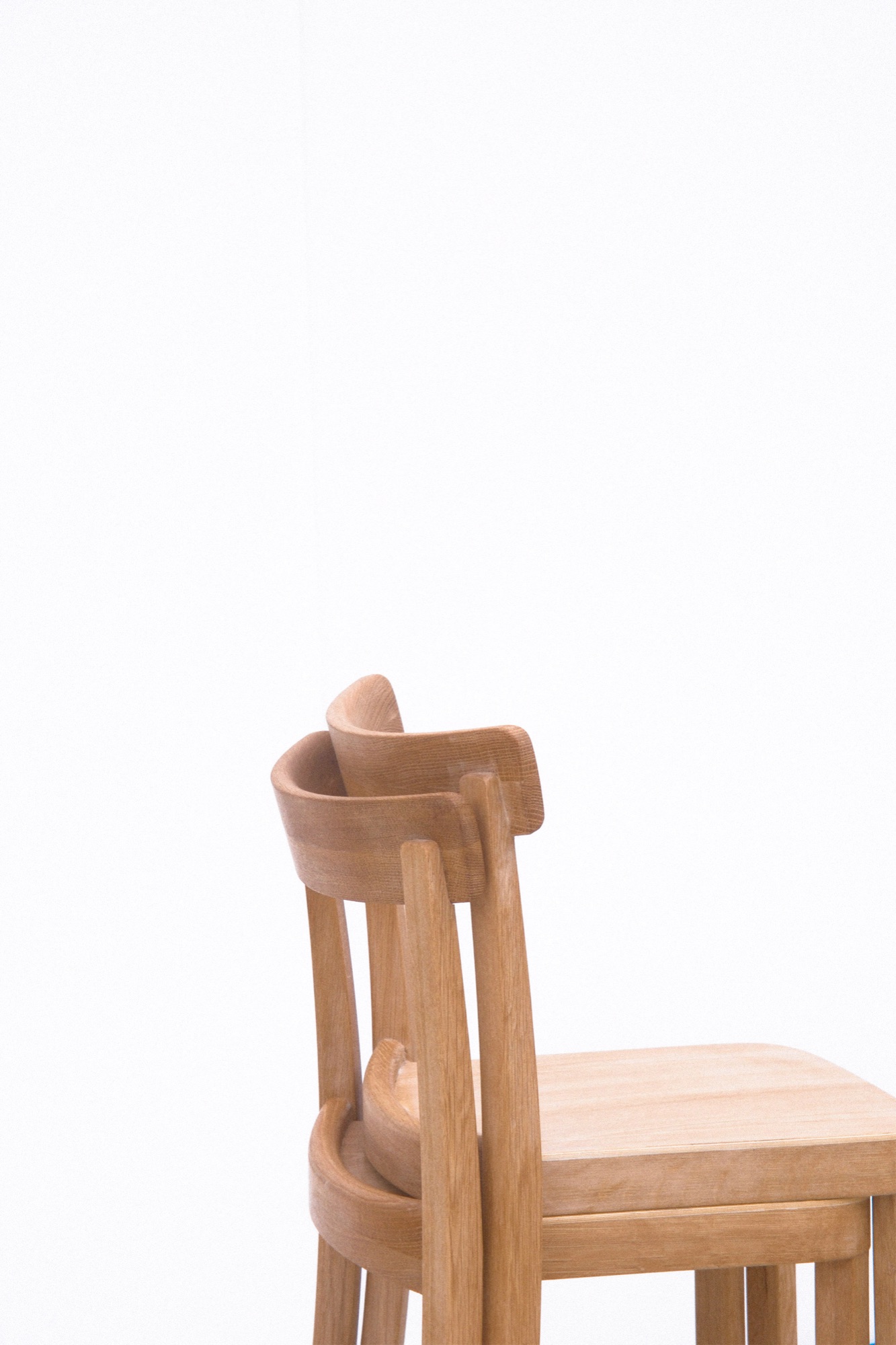
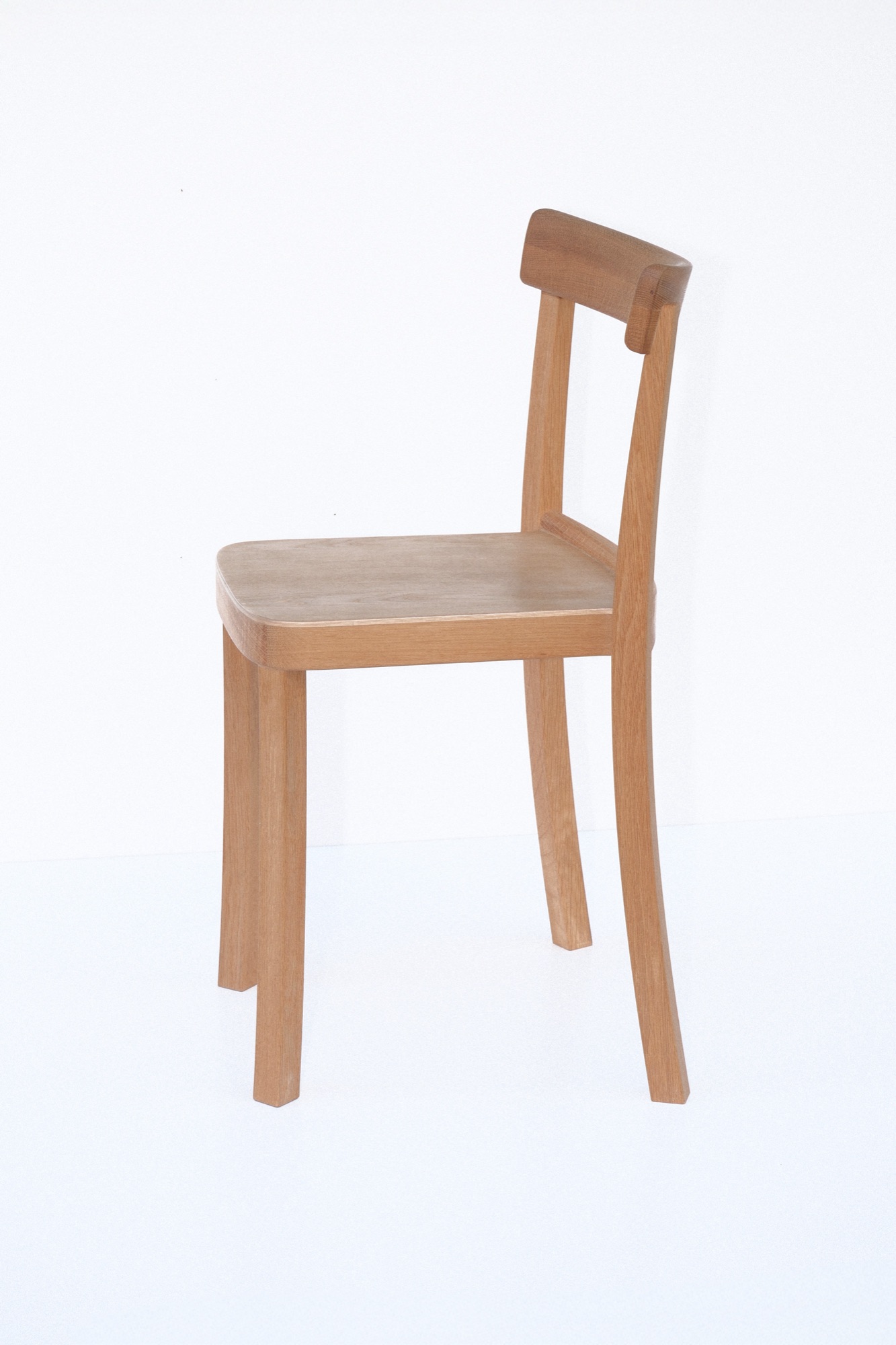
"Stacking Chair Wood" explores an expansion of the typology of wooden stacking chairs. Its starting point is to connect typologies found in chairs such as the Frankfurt Chair to the logic of stacking chairs. This typology achieves excellent strength with simply shaped components and joints arranged in horizontal and vertical relationships to the material. It meets a key requirement for stackable chairs—strength—while maintaining a simple component structure that supports high productivity.
Stacking Chair Woodは、スタッキングの木製椅子のタイポロジーを拡張することを主題にしています。出発点はフランクフルトチェアなどにみられるタイポロジーをスタッキング椅子に接続することです。単純な形状の部材と各接合部が材に対して水平垂直の関係でありながら、優れた強度を実現しているこのタイポロジーは、 スタッキング可能な椅子の大きな要件である強度を持ちながら、シンプルな部材構成であり、生産性の高さにつながります。
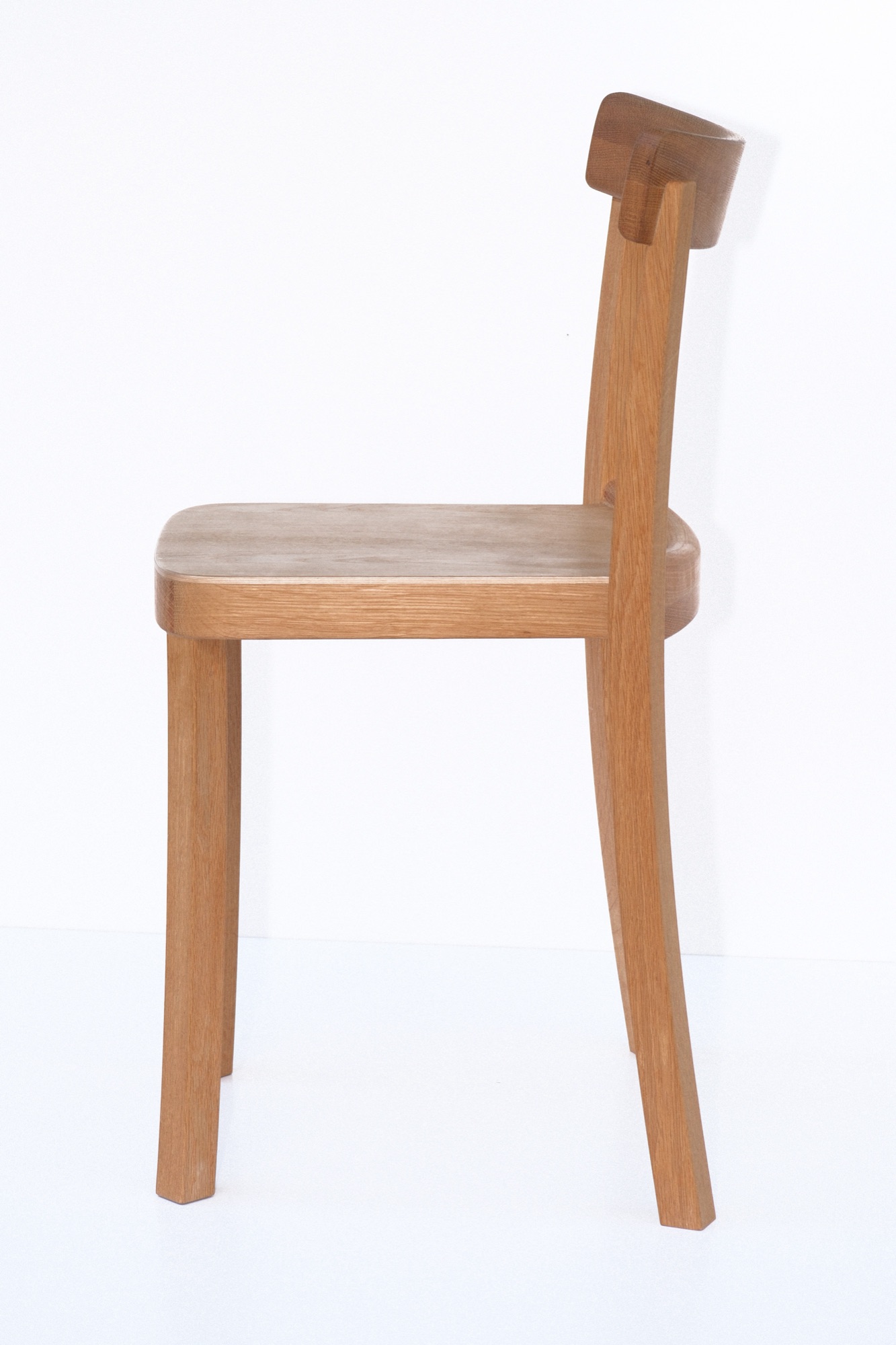
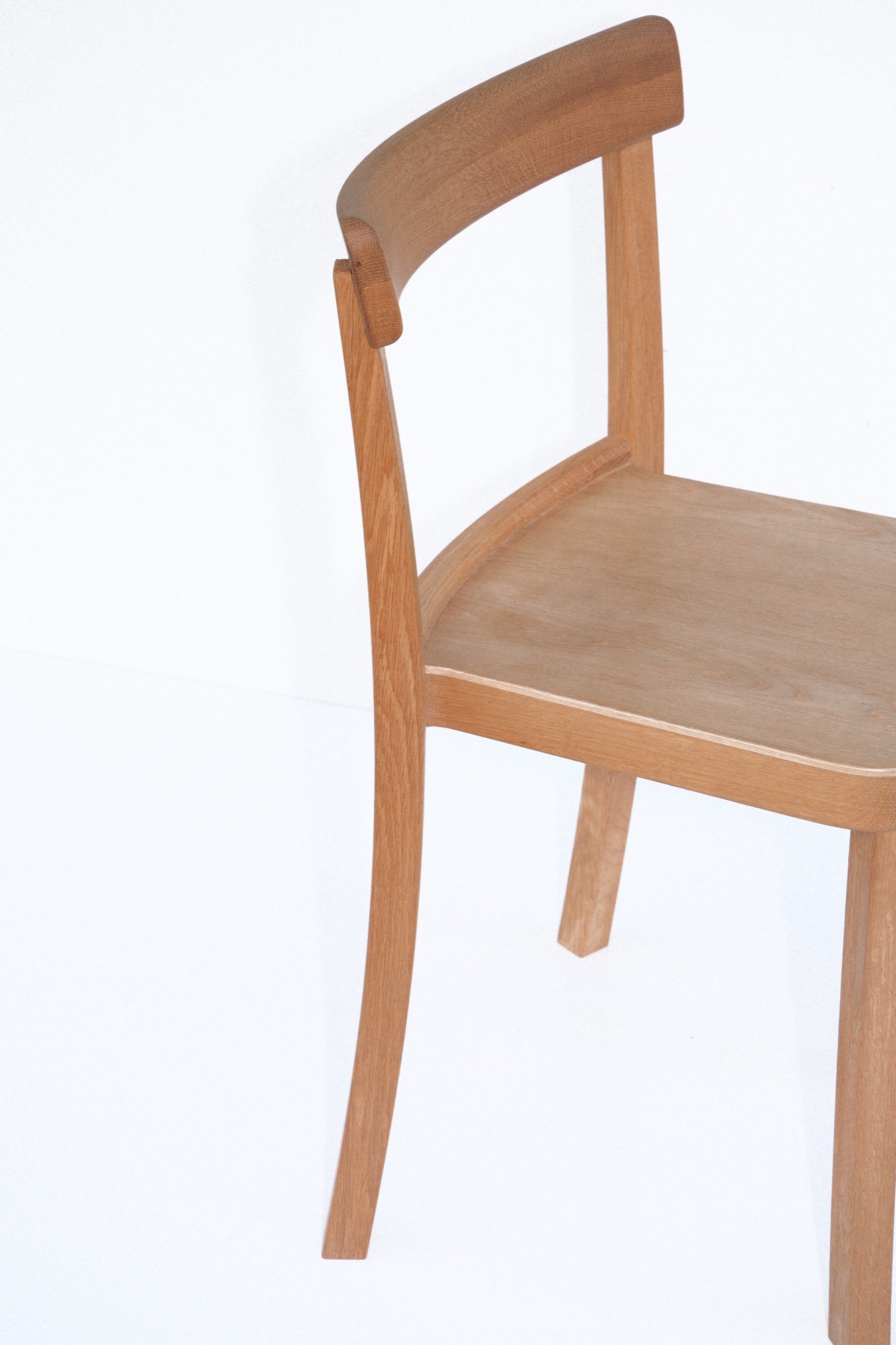
To ensure sufficient strength, the frame connecting the two rear legs must be reinforced. As seen in Alvar Aalto’s 611, this is an effective solution that preserves stacking efficiency, and it also works in combination with a Frankfurt Chair–type typology.
左右の後ろ脚を接合するフレームを強固にする必要があります。Alvar Aaltoの611にもみられるこの構造は、スタッキング効率を阻害せずに強度を持つ有効な手段であり、フランクフルトチェア的タイポロジーとの組み合わせも可能でした。
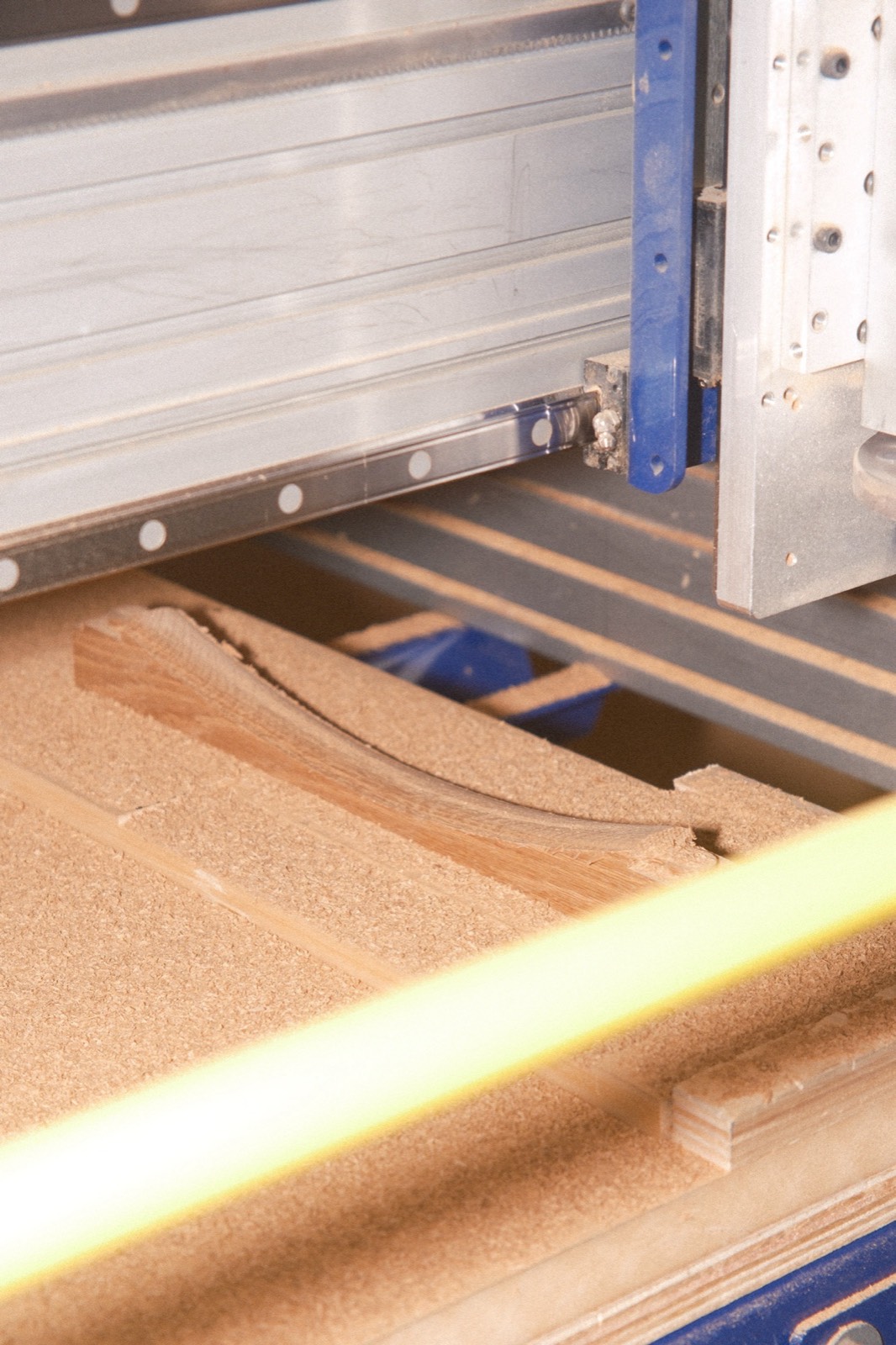
These pieces were made by me using a simple 3-axis CNC machine. Just as 3D printers have become widely accessible, we can imagine a future where production is not limited to large-scale facilities for mass manufacturing. Instead, relatively affordable, easy-to-adopt tools will exist as local labs in many places, enabling small-scale production within each region. In that context, ease of production—like this chair offers—will hold real value. Rather than manufacturing finished products in a single hub and shipping them everywhere, we can share drawings and methods so that each region can produce locally, making appropriate adjustments to suit its own conditions.
これらは簡易的な3軸のCNCで、私自身によって制作されました。 すでに3Dプリンターが広く普及しているように、量産のための大規模な設備ではなく、比較的安価で導入のしやすい設備が各地にラボとして存在し、上規模な生産がそれぞれの地で行われる未来が想定されます。 その未来において、この椅子のように生産がしやすいという観点は価値を持つでしょう。何も完成品を一つの拠点で大量に作って運ばずに、図面や方法を共有することで、それぞれの地域で、それぞれに適正な調整をしながら、生産することもできるはずです。